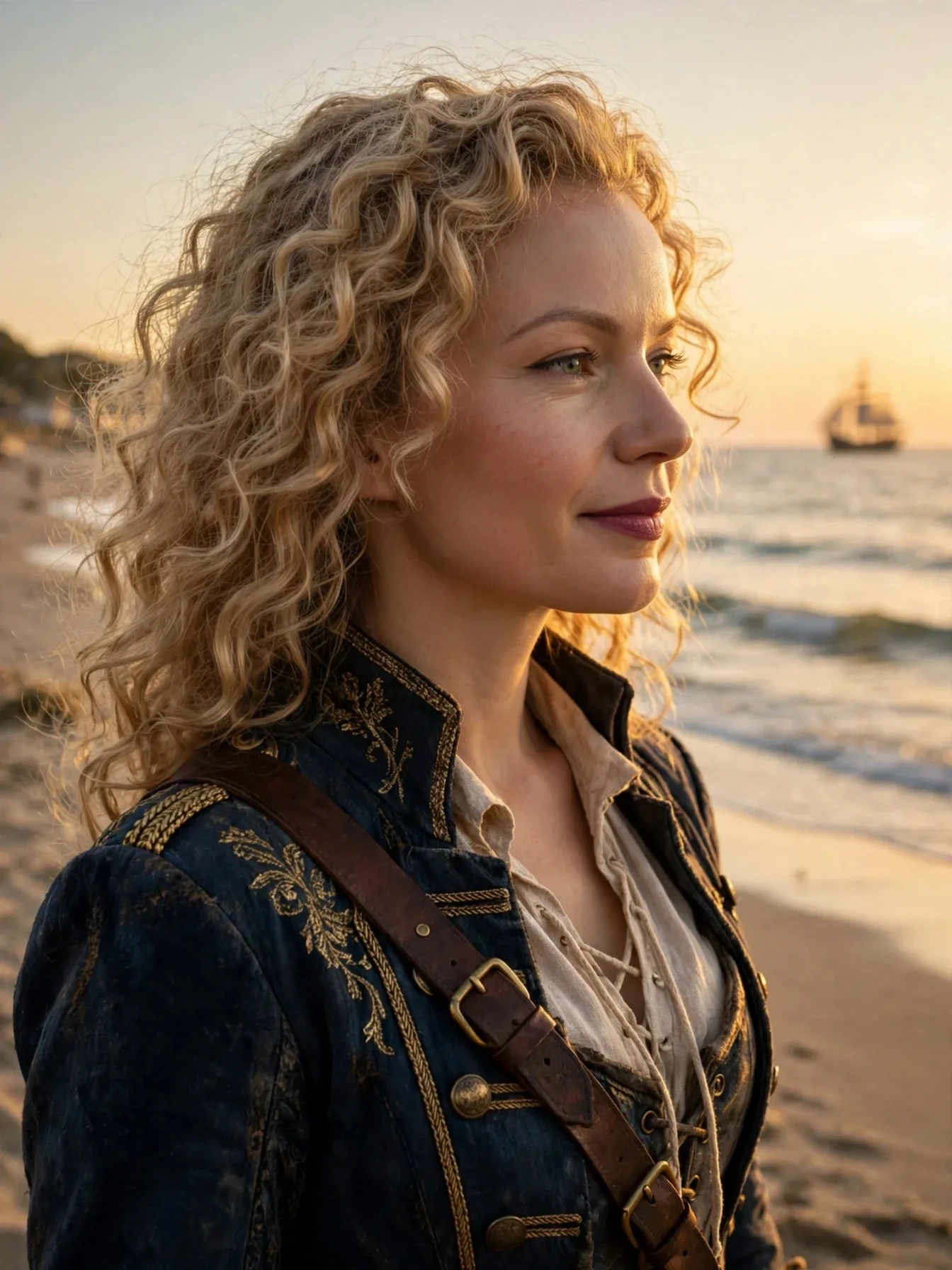
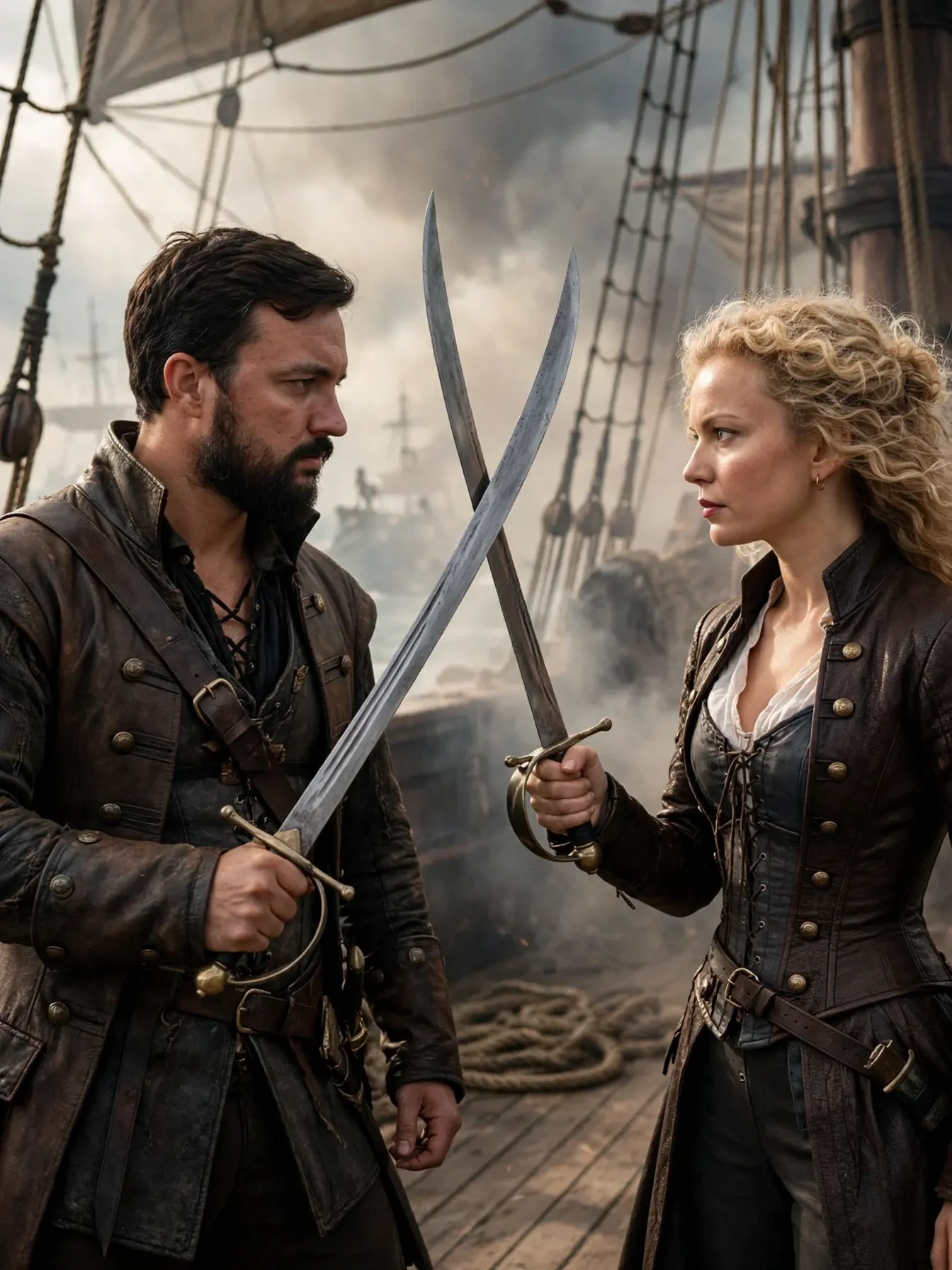
The main difference between a corsair and a pirate lies in the law: a corsair fought legally under a letter of marque from a monarch, attacked only ships of hostile powers, and paid a share to the treasury, while a pirate plundered everyone indiscriminately and was an outlaw. In captivity, a corsair faced the status of a prisoner of war and ransom, while a pirate faced execution on the yardarm. Let's break down the legal boundaries, historical facts, and costume differences for trying on a nautical look.
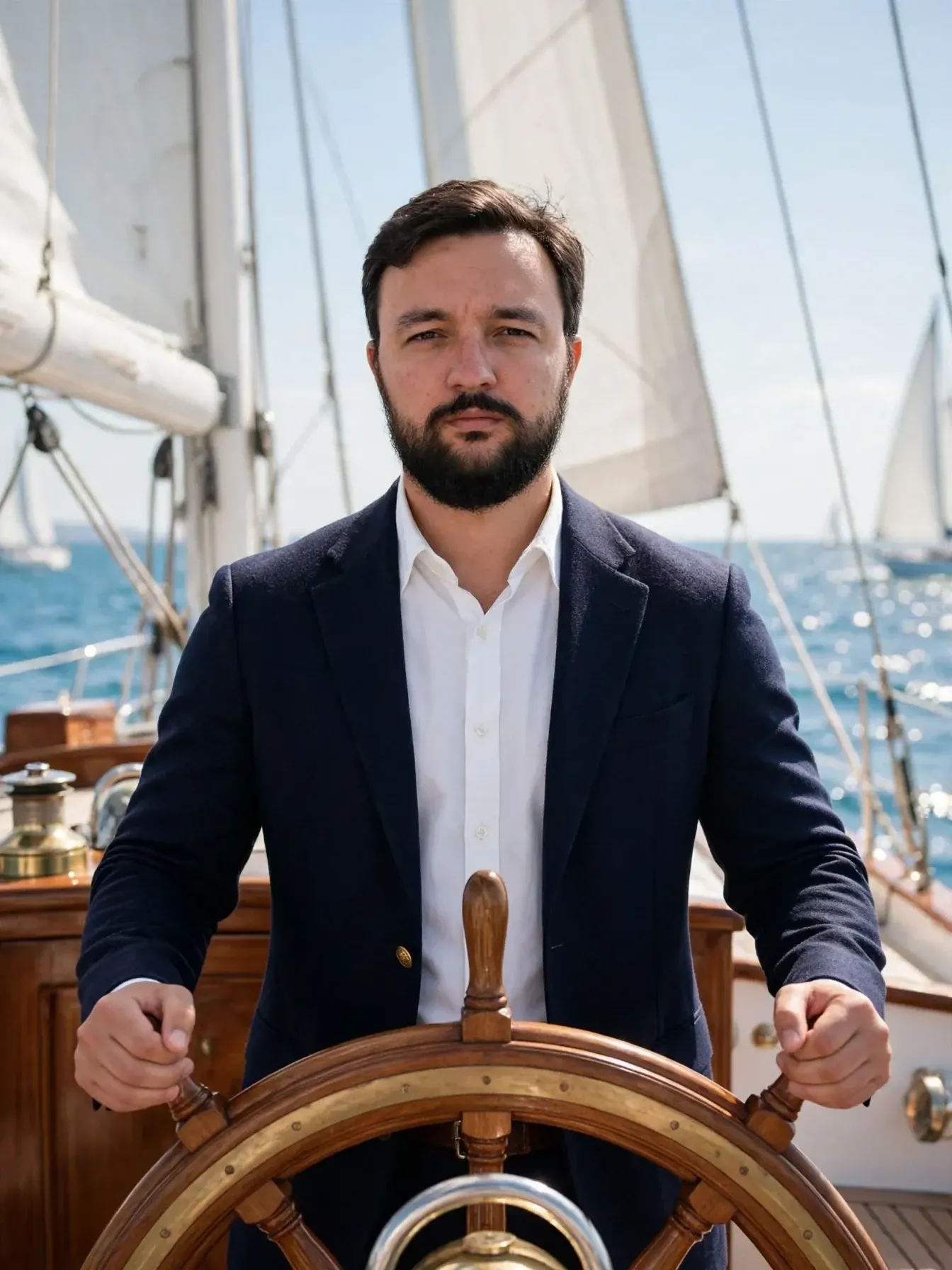
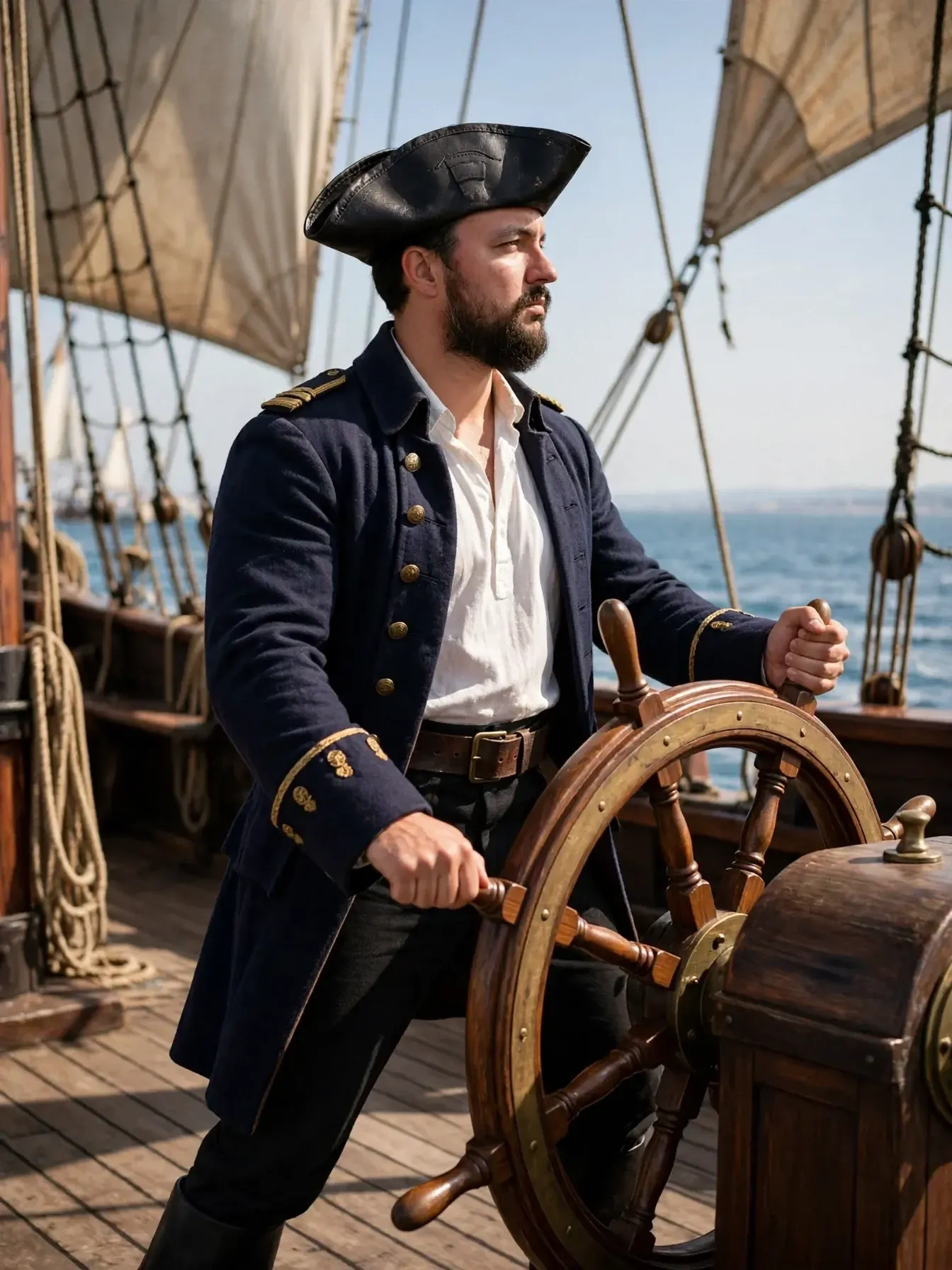
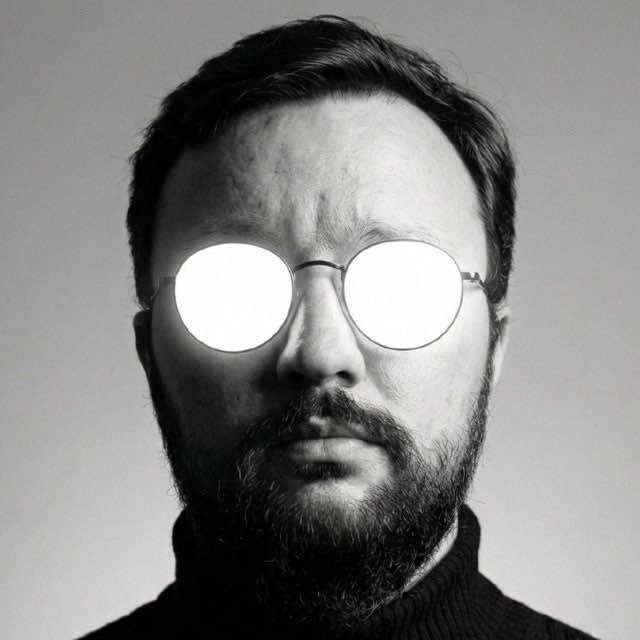
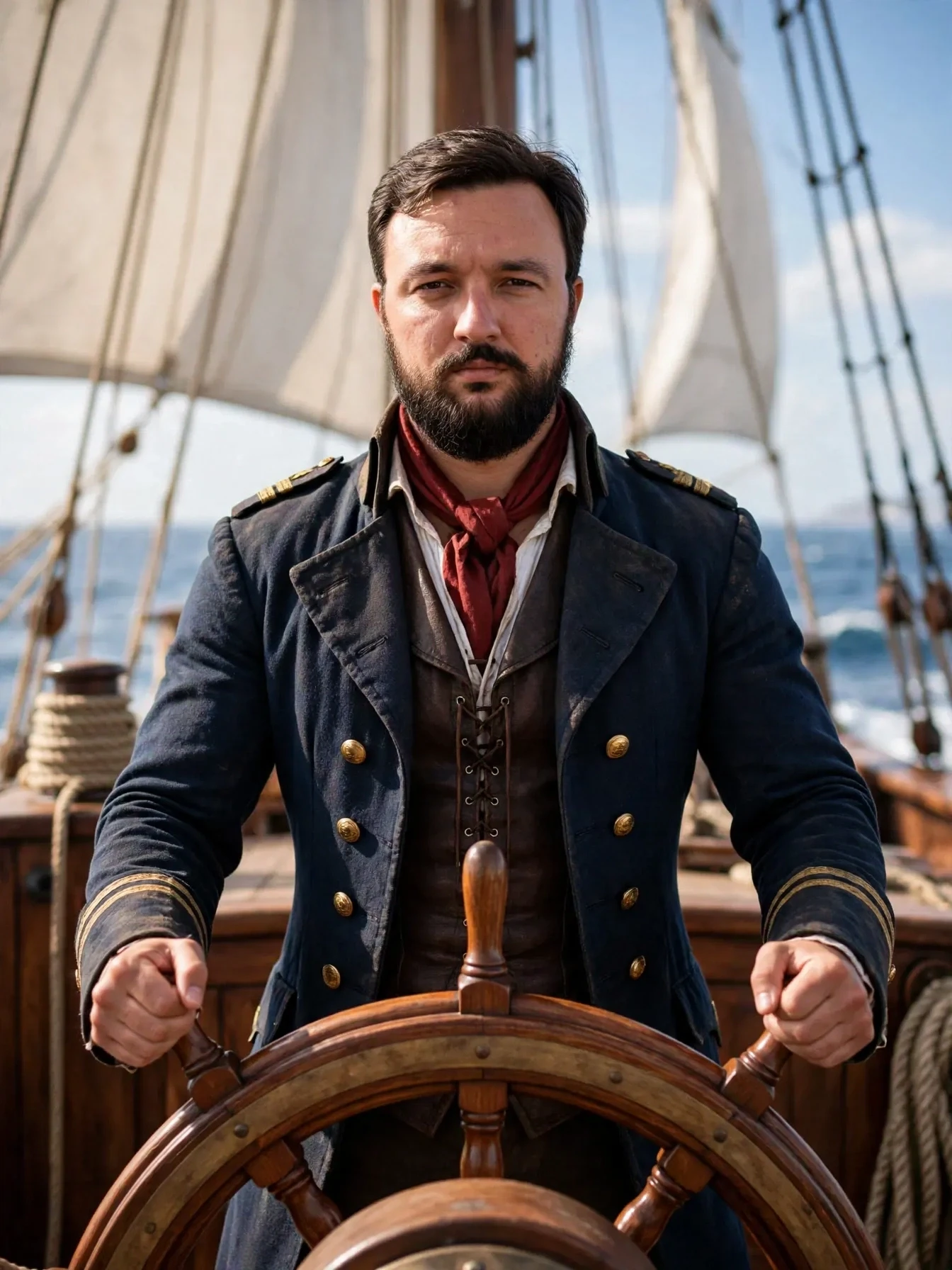
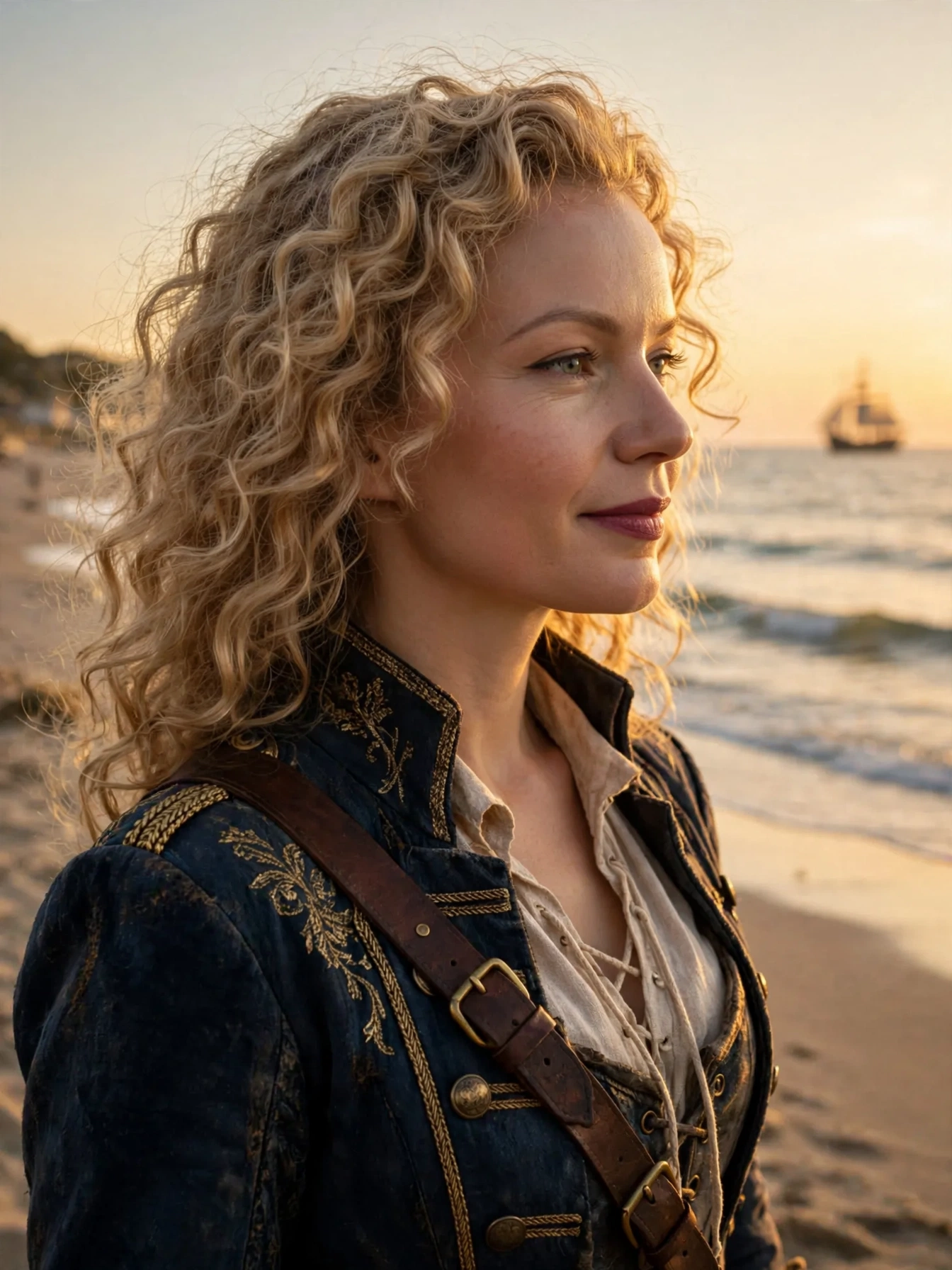
The face in the shot matches your selfie 1 to 1; check it out with a free try-on.
Adventure films and novels have long blended all sea robbers into one motley archetype. It seems a tricorn hat, a sword, and wind-filled sails make any captain equal. But in maritime history, a deep gulf lay between a corsair and a pirate. A corsair served the law and defended the interests of their crown, while a pirate declared war on all nations at once. There's no need to describe the look in words or write a complex prompt: just choose a scene or send a sample shot. If you prefer maritime romance with an officer's bearing, a photo shoot in the image of a corsair will emphasize a noble character and a captain's stature.
How to choose a scene
Start from the mood and character you want to see in the photo. For a restrained portrait of a captain at the helm, the noble appearance of a corsair in an embroidered justaucorps will work well. If you prefer rebellious excitement, stormy wind, and the gunpowder smoke of a boarding action, choose a pirate scene. Both directions are equally expressive in a solo shot and in a dynamic paired shoot.
Law and robbery: the letter of marque and official status
The main dividing line between a corsair and a pirate lay in the legal field. A corsair set out on a campaign exclusively with an official state certificate. In France such a document was called a lettre de marque, and in England a letter of marque and reprisal.
The patent was signed by the monarch, the lord admiralty, or the governor of an overseas colony. The letter turned a private ship into an auxiliary force of the regular navy for the duration of a declared war. The armateur outfitted the vessel with their own money but acted on behalf of the power. On the mainmast, the corsair captain raised the state flag. International maritime laws recognized him as a lawful combatant.
A pirate, however, went to sea without patrons and without papers. He hunted for personal gain, raised a pirate standard, and was considered by maritime law to be an "enemy of all mankind" (hostis humani generis). Any warship had the right to attack a pirate without trial or warning.
Rules of attack and division: enemies of the crown versus everyone indiscriminately
A patent did not give the right to plunder everyone indiscriminately. If France was at war with England or Spain, a French corsair had the right to attack only English and Spanish convoys. Attacking a neutral vessel threatened a major investigation. And if a corsair attacked a ship of their own countrymen, the patent was immediately annulled. The captain lost the crown's protection, became a criminal, and faced a tribunal.
The division of spoils among corsairs was subject to the strictest bureaucracy. The crew did not dare break open sealed holds or scatter doubloons on the deck. The captured ship, called a prize, was escorted to its home port. There an admiralty prize court convened. Investigators studied trade manifests, checked the ship's log, and questioned prisoners. Only when the court recognized the prize as lawful was the property put up for auction. Part of the proceeds went to the royal treasury as a tax, the armateur who outfitted the expedition received a substantial share, and the remaining sum was divided among the crew strictly according to the shares in the ship's contract.
Sea robbers had wilder customs. A pirate attacked any ship that seemed weaker, regardless of flags, peace treaties, or truces. Captured treasures were divided right by the mast according to an internal pirate agreement ("no prey, no pay"). The robbers paid no taxes or duties to the state, and they sold bales of spices and chests through black-market fences in Tortuga or Nassau.
Captivity and tribunal: noble ransom or the noose on the yardarm
The true price of a letter of marque became clear in the hour of defeat. If a corsair ship lost an artillery duel to an enemy military frigate, the captain presented the document. From that moment, the crew passed into the status of prisoners of war.
By the laws of honor of the 17th–18th centuries, captured officers were not hanged. Corsair commanders, many of them Breton nobles from Saint-Malo, were placed in fortresses with officers' rights. They were soon exchanged for prisoners of equal rank or released on their word of honor for ransom. Kings were proud of successful privateers: France's national legends Jean Bart and René Duguay-Trouin received noble titles, gold swords, and became admirals of the royal navy.
A pirate, however, faced an inevitable noose upon capture. The admiralty tribunal did not stand on ceremony with robbers: they were tried by speedy trial as murderers and thieves. The sentence was carried out publicly in the port docks before a crowd. In London, there was a grim Execution Dock at the water's edge for this. The bodies of the most dangerous ringleaders, such as William Kidd, were coated in tar after execution and placed in iron cages over the Thames, where they hung for years as a warning to incoming ships.
Corsairs, privateers, privateers, and buccaneers: what's the difference
The historical confusion arose because different maritime powers called hunters of trade convoys in their own way:
- Corsairs (fr. corsaires) — the traditional French and Mediterranean name for privateers. French corsairs from Saint-Malo and Dunkirk terrorized trade routes in the English Channel and the Atlantic. Europeans also used this term for North African sailors from Algiers and Tripoli (Barbary corsairs).
- Privateers (German Kaper, Dutch kaper) — a German and Dutch word derived from the verb kapen (to seize, to capture). The term entered the Russian maritime lexicon during the era of Peter the Great's reforms from Dutch regulations.
- Privateers (Eng. privateers) — an English term from the word private. British privateers outfitted armed ships with the funds of London merchants. Sir Francis Drake and Sir Walter Raleigh plundered Spanish silver convoys precisely as privateers under the secret patronage of Queen Elizabeth Tudor.
- Buccaneers (fr. boucaniers) — originally free hunters on the island of Hispaniola who smoked wild bull meat in smokehouses called boucans. After losing their hunting grounds to Spanish punitive expeditions, the hunters moved to barques and began attacking coastal vessels, becoming a formidable force in the Antilles.
- Filibusters (fr. flibustiers, from Dutch vrijbuiter — free plunderer) — the Caribbean pirate brotherhood of the 17th century with bases in Tortuga and Jamaica. Colonial authorities often supplied them with letters against hostile Spain, but as soon as peace was concluded, the filibusters instantly returned to their usual maritime robbery.
Table of key differences
| Criterion | Corsair (privateer, privateer) | Pirate (outlaw robber) |
|---|---|---|
| Legal status | Lawful combatant in state service | Criminal outlaw |
| Document | Letter of marque from a monarch or governor | None; operates under the gang's internal code |
| Permitted targets | Exclusively ships of hostile states | Any defenseless vessel under any flag |
| Division of spoils | Through a prize court with a share paid to the treasury | On deck among crew shares without taxes |
| Flag on the mast | The state flag of their country | The "Jolly Roger" or a deceptive foreign flag |
| Fate in captivity | Prisoner-of-war status, detention, ransom | Admiralty trial and death by hanging |
| Social status | Respected captain, noble, national hero | Social outcast, runaway sailor, fugitive from the law |
| Costume and entourage | Officer's justaucorps, sword, neckerchief, tricorn hat | Canvas shirt, saber, waist sash, bandana |
Costume and aesthetics: how to tell a corsair from a pirate at a photo shoot
To make a photograph look authentic, it is important to choose the wardrobe and environmental details correctly. The corsair style is built on the bearing of a nobleman and naval officer:
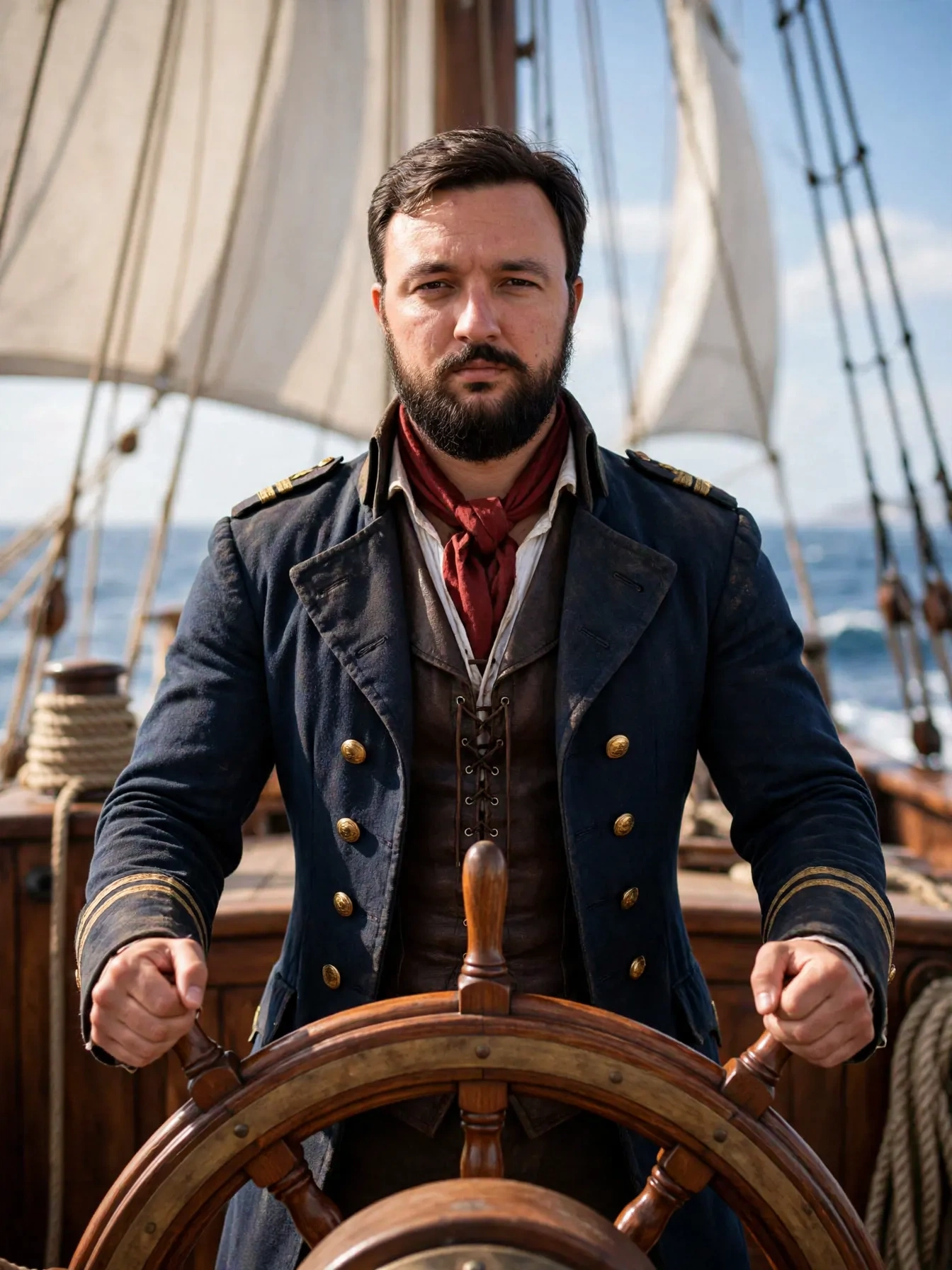
- Corsair costume: a fitted justaucorps of dark blue cloth or velvet in a deep wine shade with gilded buttons, a standing collar, and strict epaulettes. Beneath the justaucorps, a thin linen shirt with lace cuffs and a silk neckerchief are worn. The silhouette is completed by a felt tricorn hat edged with gold braid.
- Corsair weapons and props: an officer's sword with an openwork guard, a naval dirk, a brass spyglass, an antique compass in a wooden case, and a rolled-up patent scroll with a heavy wax seal.
- Pirate costume: a sailor's clothing, battered by storms and gunpowder. A loose canvas shirt with an open collar, a coarse leather vest with lacing, a thick fabric sash, and a bandana tied around the head.
- Pirate weapons and props: a heavy boarding saber (cutlass) with a wide blade, a pair of flintlock pistols at the belt, a dagger, and leather bracelets with metal studs.
Poses and angles
The expressiveness of a historical shot rests on posture and a confident gaze:
- Officer's stance: turn your torso three-quarters toward the camera, lower your palm onto the hilt of a sword or the wooden rim of the helm, straighten your shoulders, and keep your chin level. A calm, focused gaze will make the image monumental.
- Shot in motion: take a wide step along the boards of a pier or deck into the wind, holding a spyglass or the edge of a map with your hand. The fluttering skirts of the justaucorps will add lively dynamics to the shot.
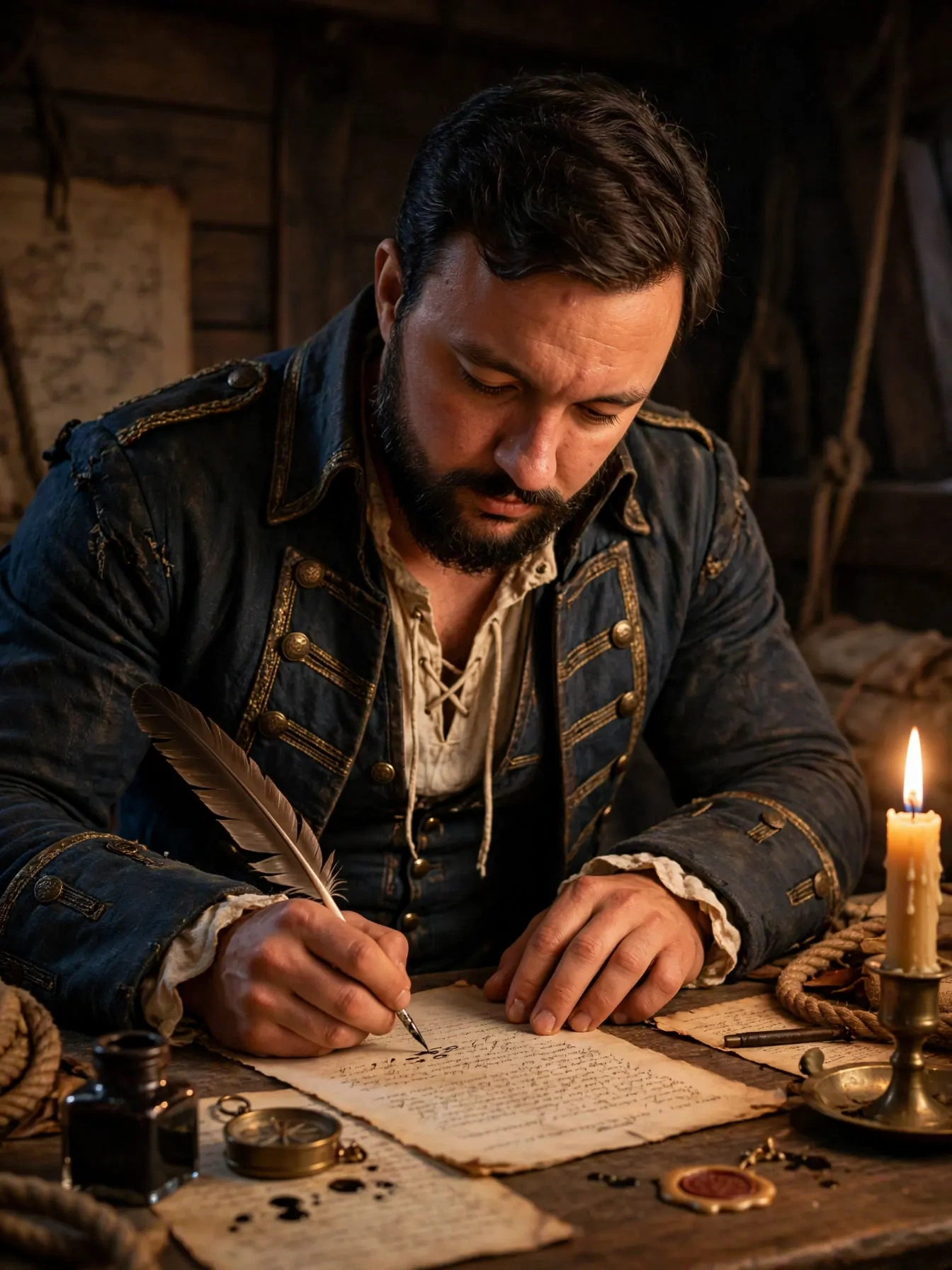
- Close-up: bend over an oak table in a cabin by soft candlelight, studying sea straits on old parchment. The shot focuses on the hands, the texture of the papers, and the gaze.
- Pose for a couple: a dynamic duel with crossed sabers or shoulder to shoulder at the ship's bulwark. Direct your gazes toward each other so the shot fills with genuine tension and excitement.
For shooting in the image of a corsair, natural makeup with a matte finish and neat styling with strands that reveal the neckline and cheekbones are best.
How to get such a shot
- Choose a scene in the catalog or send a sample you like. For a scenario with your own example, send a shot you like from Pinterest, Yandex Images, or Google Images.
- Upload a clear portrait selfie. A photo in soft, even lighting with open eyes, without sunglasses, and without a head covering will work.
- Get the finished shot in forty seconds. The first try-on of the look can be done for free, without a card and without registration.